

|
Mga Pangunahing Update |
Mga Update ng Kasosyo |
Mga Update sa Outreach |
HSR sa Balita |
2025: Isang Taon ng Pag-unlad sa mga Pagkuha
Ang California High-Speed Rail Authority (Authority) ay nagkaroon ng malaking taon para sa mga pangunahing pagkuha noong 2025. Ang pag-unlad na ito ay nagsimula sa isang forum ng industriya na ginanap noong nakaraang Enero, kung saan mahigit 400 na dumalo mula sa pribadong sektor ang nakipagpulong sa Awtoridad sa iba't ibang paksa. Noong Nobyembre, naglabas ang Awtoridad ng isa sa pinakamalaking pagkuha para sa anumang proyektong imprastraktura sa bansa na may $3 bilyong pagkuha ng track at system, at, nang sumunod na buwan, naglabas ng isang Kahilingan para sa mga Kwalipikasyon para sa isang kasunduan sa co-development upang pumili ng isang pribadong kasosyo upang suriin ang mga pagkakataon na mamuhunan at maihatid ang proyekto nang mas mahusay. Magbasa nang higit pa tungkol sa parehong pagkuha sa ibaba.
Pagpasok ng 2026, asahan ang mas maraming oportunidad para sa mga negosyo – malalaki at maliliit – upang makatulong sa pagbuo ng unang tunay na high-speed rail system ng bansa. Para matuto nang higit pa tungkol sa mga kasalukuyang oportunidad sa pagkuha, siguraduhing manatiling konektado sa pamamagitan ng pagbisita sa Pahina ng mga Pagbili at Webpage ng Maliit na Programa ng Negosyo.
Mas Papalapit ang California High-Speed Rail sa Riles at mga Sistema

Ang paglalabas ng RFP ng Kontrata sa Konstruksyon ng Track and Systems ay isang mahalagang hakbang sa paglalatag ng mga unang milya ng riles ngayong taon.
Gaya ng nabanggit sa itaas, noong Nobyembre 26, opisyal na humingi ng mga bid ang Awtoridad mula sa mga kwalipikadong vendor upang simulan ang pagtatayo ng unang high-speed rail track at mga sistema ng bansa sa loob ng taon. Ang $3.5 bilyong Kahilingan para sa mga Panukala sa Kontrata ng Konstruksyon ng Track at mga Sistema ay nagmamarka ng isang malaking pagbilis patungo sa pag-install ng track ngayong taon sa Central Valley ng California at isang makabuluhang pag-unlad ng unang high-speed rail system ng bansa patungo sa mga operasyon.
Ihahatid ng kontrata ang mga sistemang gagawing gumaganang high-speed rail line ang mga gawaing sibil na ginagawa ngayon. Saklaw ng kontrata ang riles, overhead contact system, kontrol ng tren, komunikasyon, at ang pagsusuri at sertipikasyon sa kaligtasan na kinakailangan para sa serbisyo, ang kontrata ay sumasaklaw sa 119 milyang ginagawa ngayon hanggang sa mga extension ng Merced at Bakersfield.
Para sa karagdagang impormasyon tungkol sa mahalagang milestone na ito, tingnan ang press release.
Inilunsad ng High-Speed Rail ang Proseso upang Makaakit ng mga Pribadong Mamumuhunan
Dahil sa lumalaking interes ng pribadong sektor sa proyekto, sinimulan ng Awtoridad ang isang proseso upang maakit ang mga pribadong mamumuhunan at mga developer sa Awtoridad pagsapit ng tag-init ng 2026 bilang bahagi ng pokus ng CEO na si Ian Choudri sa mas mabilis, mas matalino, at mas matipid na paghahatid.
Ang pag-isyu ng Awtoridad ng isang Kahilingan para sa mga Kwalipikasyon noong Disyembre 19 para sa isang Kasunduan sa Pag-unlad (CDA) ay naglalayong pumili ng isang pribadong kasosyo upang suriin ang mga pagkakataon na mamuhunan at maihatid ang proyekto nang mas mahusay, habang ginagawang komersyalisado ang mga asset sa pinakamaagang posibleng pagkakataon.
Nakakita ang Awtoridad ng matinding interes mula sa pribadong sektor sa pamumuhunan sa proyektong high-speed rail, at ang pagkuhang ito ay nagpapatunay sa mga pagsisikap na makipagsosyo sa mga pribadong mamumuhunan at mga developer. Sa pamamagitan ng paggamit ng inobasyon at pinakamahuhusay na kasanayan ng pribadong sektor kasabay ng malakas at matatag na pondo ng estado, maaaring mapakinabangan ng Awtoridad ang halaga ng pamumuhunan ng California at mapabilis ang paghahatid ng high-speed na imprastraktura sa buong estado. Hindi lamang binabawasan ng pribadong pamumuhunan ang mga kinakailangan sa pampublikong kapital, kundi pinapabilis din nito ang timeline ng proyekto, na nagbabawas sa mga gastos sa financing at nagpapababa sa kabuuang gastos ng proyekto.
Bilang halimbawa ng pinahusay na proseso, magagawa ng Awtoridad na agad na pakilusin ang paglalatag ng riles, na makakatipid sa pera ng mga nagbabayad ng buwis sa pamamagitan ng paghahatid ng mga materyales on-site sa lalong madaling panahon mula sa mga nagtitinda mula sa buong US.
Para sa karagdagang impormasyon at impormasyon tungkol sa estratehiyang ito sa pagpopondo at pagpapaunlad, basahin ang press release.
Inilabas ng Awtoridad ang Ulat sa Pag-unlad para sa Taglamig 2026
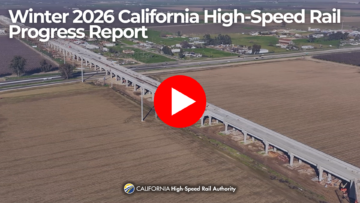
Mag-click dito para panoorin ang video.
Naglabas ang Awtoridad ng isang video na nagtatampok ng mga pinakabagong update sa unang proyekto ng high-speed rail sa bansa. Panoorin ang mga pangunahing update sa konstruksyon sa mga istruktura ng high-speed rail sa buong Central Valley, kabilang ang Road 26 Grade Separation, Hanford Viaduct, at Shaw Avenue Grade Separation. Tampok din sa video ang mga update sa proyekto ng railhead sa Kern County, at, gaya ng nabanggit sa itaas, ang paglabas ng kontrata ng track at mga sistema pati na rin ang mga draft na dokumentong pangkapaligiran para sa segment ng Los Angeles hanggang Anaheim. Panoorin ang video ng Ulat sa Pag-unlad dito.
Ang pag-unlad na ito ay dumating matapos ang matagumpay na pagtatapos ng 2025 na may dalawa pang istruktura na binuksan sa Central Valley sa huling bahagi ng Oktubre. Ang paghihiwalay ng Avenue 17 grade sa Madera County at Hanford Armona Road grade separation ay binuksan noong huling bahagi ng Oktubre habang ang ikawalo at ikasiyam na istruktura ay natapos noong nakaraang taon. Ang mga istrukturang tulad ng mga iyon ay naghihiwalay sa mga sasakyan at mga naglalakad mula sa kasalukuyang operasyon ng freight rail at mga operasyon ng high-speed rail sa hinaharap. Binabawasan nito ang mga epekto sa kapaligiran at kalusugan mula sa mga sasakyang nakatigil at nagbibigay ng mga benepisyo sa kaligtasan para sa komunidad.
Inilabas ng Awtoridad ang Draft ng Dokumentong Pangkapaligiran para sa Los Angeles sa Seksyon ng Anaheim
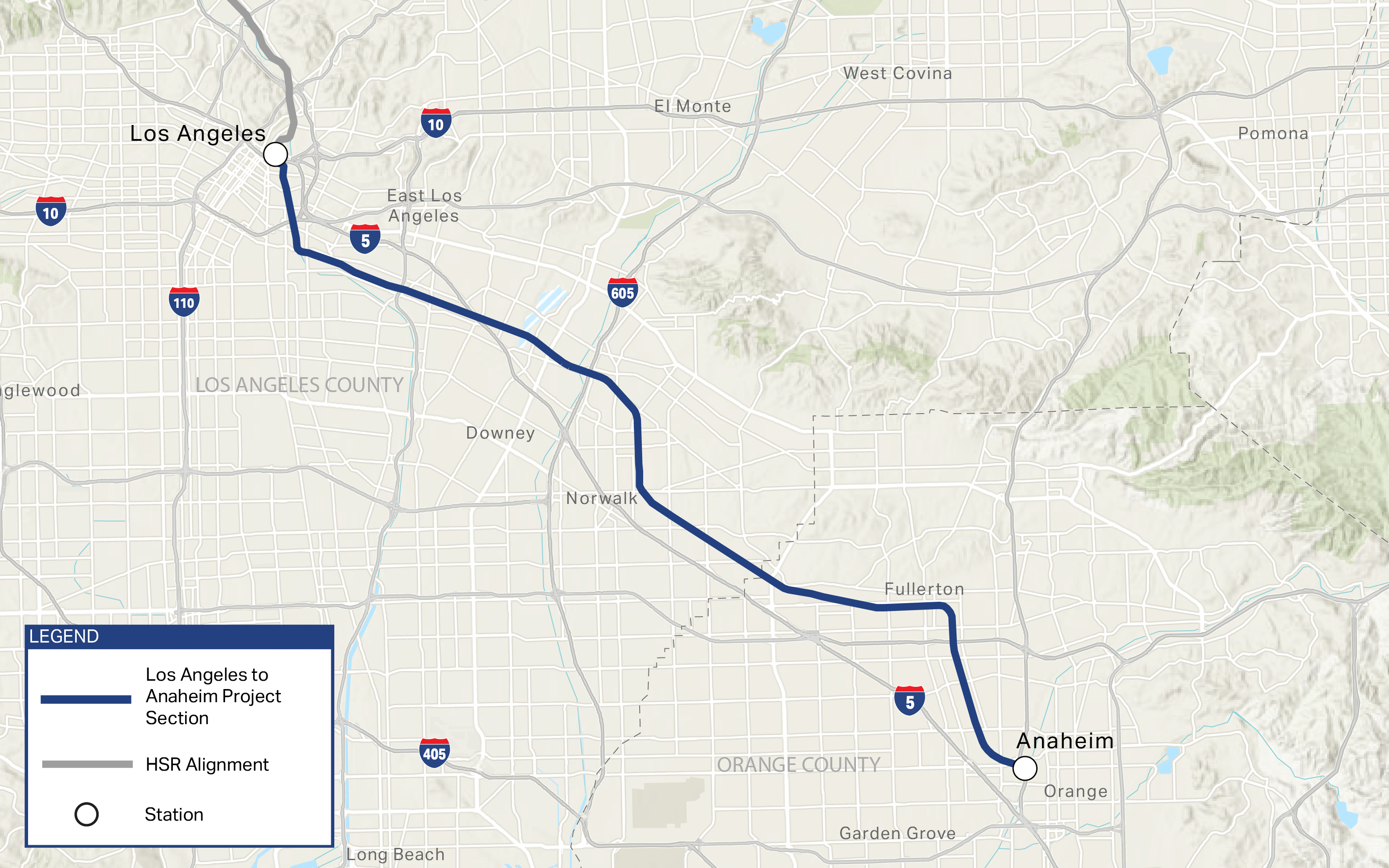
Sa pamamagitan ng dokumentong ito, malapit nang makamit ng Awtoridad ang ganap na paglilinis sa kapaligiran ng Phase 1 na sistema.
Inilabas ng Awtoridad ang Draft ng Ulat sa Epekto sa Kapaligiran/Pahayag ng Epekto sa Kapaligiran (EIR/EIS) para sa Los Angeles hanggang Anaheim seksyon ng proyekto noong Disyembre 5. Ang 30-milyang bahagi sa pagitan ng Los Angeles at Anaheim ang huling seksyon ng proyekto sa proseso ng paglilinis sa kapaligiran, na naglalapit sa proyekto sa ganap na paglilinis sa kapaligiran para sa 494-milyang Phase 1 system. Ang draft na dokumentong pangkapaligiran ay maaaring masuri at mabigyan ng komento ng publiko hanggang Pebrero 3, 2026.
Ang seksyon ng proyektong Los Angeles patungong Anaheim ang pinakatimog na ugnayan ng unang yugto ng pambuong-estadong sistema ng high-speed rail, na nagdurugtong sa Los Angeles Union Station sa Anaheim Regional Transportation Intermodal Center, gamit ang koridor ng tren mula Los Angeles patungong Anaheim na kasalukuyang nagsisilbi sa parehong serbisyo ng kargamento at pasahero.
Para matuto nang higit pa tungkol sa mga dokumentong pangkapaligiran ng LA-A, basahin ang press release.
Nakatingin sa Unahan
Sinusubaybayan ng Awtoridad ang ilang mahahalagang hakbang at mga nagawa upang mapanatili ang proyektong ito sa pag-usad ngayong taon, kabilang ang:
- Pasilidad ng himpilan ng riles sa timog malapit sa Wasco para sa operasyonalisasyon.
- RFEI at pagkuha ng Malinis na Enerhiya.
- Nagsimula na ang paghahatid ng mga komoditidong materyales sa riles. Kamakailan ay pumirma ang Awtoridad ng isang kontrata para sa serbisyong ito, kaya ang prosesong ito ay malapit nang maisakatuparan.
- Iginawad at isinama ang Co-development Partnership.
- Iginawad ang Kontrata sa Konstruksyon ng Track at Systems.
- Halos natapos na ang 119-milyang gawaing sibil.
- Nagsisimula na ang paglalatag ng mga high-speed na riles.
| MGA UPDATE NG PARTNER |
Mas Malinis at Mas Malusog ang Electrified Caltrain
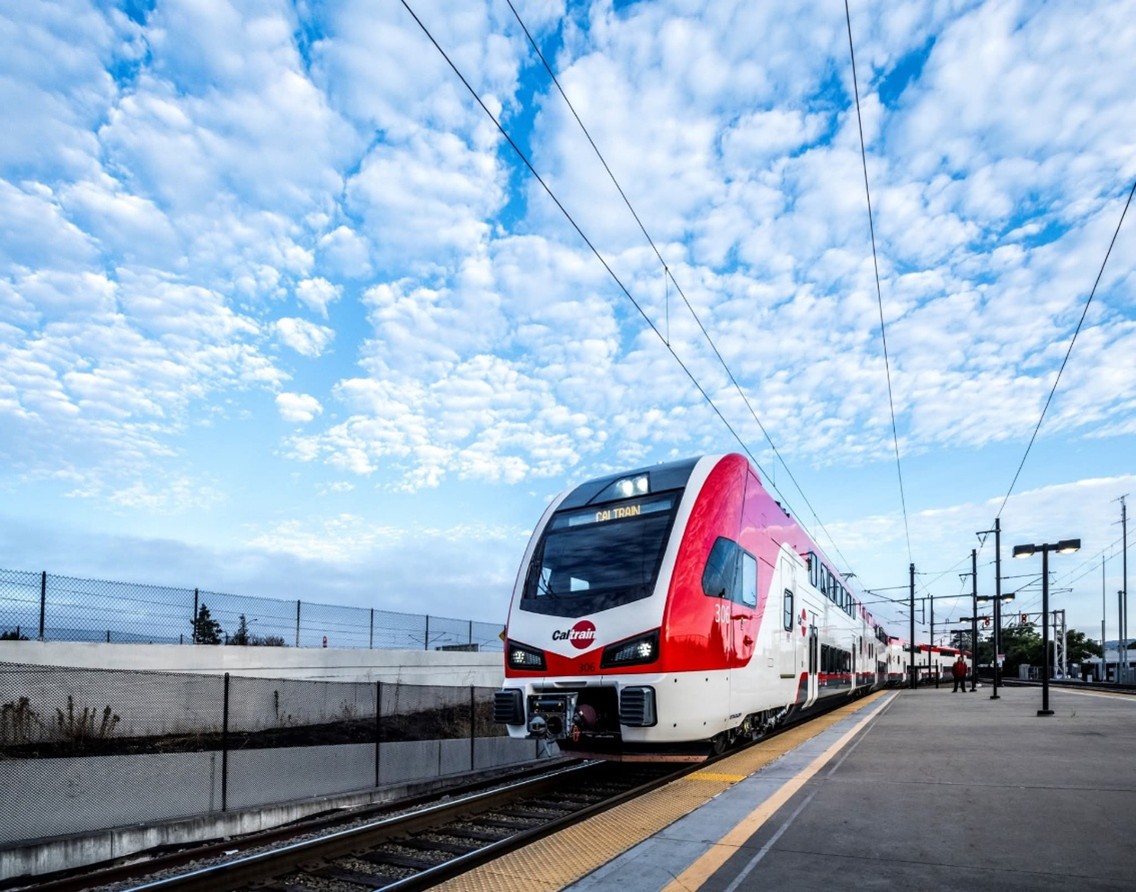
Ang elektripikasyon ng Caltrain ay nagdulot ng mas malinis at mas malusog na hangin para sa mga pasahero at mga karatig-komunidad. Kredito ng larawan: Caltrain
Ang pamumuhunan ng Awtoridad sa elektripikasyon ng Caltrain ay ang paglilinis ng ating pinagsasaluhang hangin. Isang bago natuklasan ng pag-aaral Ang pag-upgrade ng sistema mula sa mga tren na pinapagana ng diesel ay humantong sa malaking pagbaba sa nakamamatay na pollutant na itim na carbon, na tinatawag ding soot.
Apat na siyentipiko sa University of California, Berkeley ang sumubaybay sa dami ng itim na carbon na naroroon bago at pagkatapos ng paglipat mula sa diesel power. Nakatuon sina Propesor Joshua Apte at mga mananaliksik na sina Samuel Cliff, Haley McNamara Byrne, at Allen Goldstein sa itim na carbon dahil ito ay isa sa mga pinakalaganap na carcinogen sa mundo at nagdudulot ng maraming sakit sa paghinga.
Natuklasan nila na ang dami ng itim na carbon sa loob ng mga bagon ng Caltrain ay bumaba ng 89 na porsyento. Bumaba rin ang dami ng itim na carbon sa mga plataporma at malapit sa mga istasyon. Ito ay isang malinaw na benepisyo sa kalusugan ng publiko para sa mga pasahero, konduktor, at komunidad ng tren.
Ang serbisyo ng high-speed rail sa hinaharap ay magdudulot ng parehong mga benepisyo sa kalusugan at kapaligiran sa mas malawak na saklaw. Ang pag-iwas sa mga emisyon ng polusyon sa hangin dahil sa operasyon ng high-speed rail ay maaaring makatipid ng mahigit 400 pagkamatay na may kaugnayan sa polusyon sa hangin at maiwasan ang daan-daang libong kaso ng hika sa loob ng 50-taong panahon ng operasyon.
Ang Awtoridad ay namuhunan ng mahigit $714 milyon sa elektripikasyon ng Caltrain at ibabahagi ang mga riles sa isang "blended system."
| MGA UPDATE NG OUTREACH |
Paggawa ng Kaso sa Manny's in the Mission

Tinalakay nina CEO Ian Choudri at editor ng Streetsblog SF na si Roger Rudick ang high-speed rail sa Manny's in the Mission.
Nagbigay ng mga update si CEO Choudri sa isang grupo ng mga mahilig sa transportasyon sa San Francisco tungkol sa proyekto sa isang kamakailang pampublikong talakayan na pinangunahan ng Manny's in the Mission. Ang Manny's ay isang lugar para sa pagpupulong at pagkatuto na nakatuon sa komunidad sa San Francisco, isang pinagsamang restawran, tindahan ng mga aklat na pampolitika, at espasyo para sa mga kaganapang sibiko na nagpapahintulot sa mga non-profit, aktibista, at mga organisasyong sibiko na ipalaganap ang kanilang mensahe. Pinangunahan ni Roger Rudick, ang editor ng Streetsblog San Francisco, ang isang malawak na pag-uusap kay CEO Choudri tungkol sa pagpopondo ng proyekto, mga plano para sa Bay Area, at mga teknikal na hamon.
Pakinggan ang buong usapan sa Talking Headways podcast ng Streetsblog sa Website ng Streetsblog o sa SpotifyPakinggan ang mga reaksyon ng madla sa ulat na ito mula sa KALW.
Umakit ng Maraming Tao ang Fresno Small Business Fair
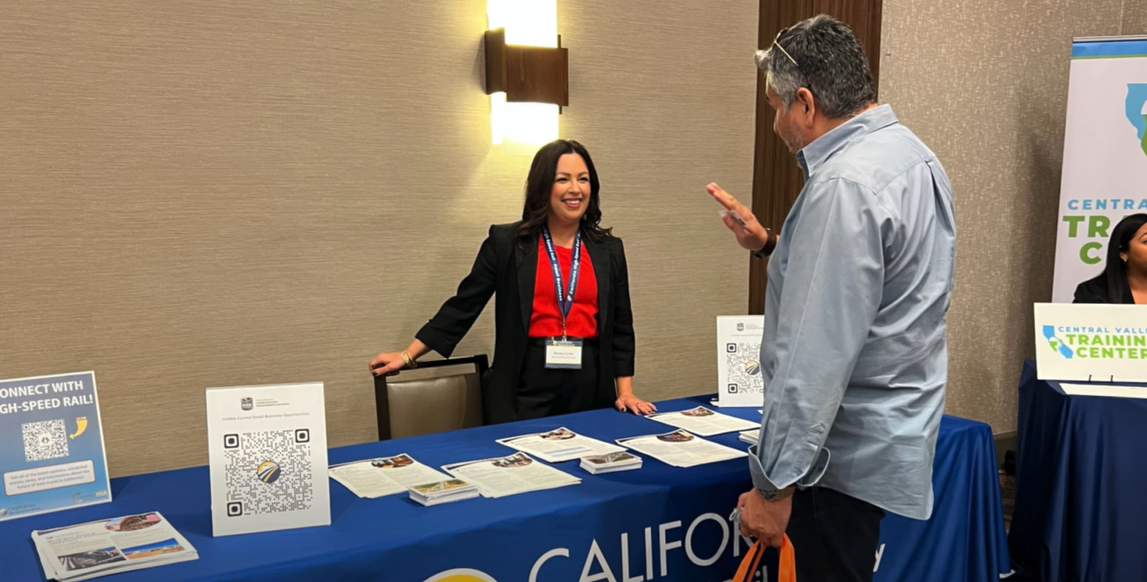
Nagsalita ang Tagapagtaguyod ng Maliliit na Negosyo na si Norma Curiel sa isang dumalo sa workshop ng Awtoridad tungkol sa pagkuha ng MATOC.
Nagdaos ang pangkat ng Maliliit na Negosyo ng Awtoridad ng isang workshop noong Nobyembre 3 sa Fresno upang magbigay ng pangkalahatang-ideya sa proseso ng pagkuha ng Multiple Award Task Order Contract (MATOC) ng Awtoridad, na nag-aalok ng isang nababaluktot, mahusay, at mapagkumpitensyang pamamaraan upang makakuha ng iba't ibang serbisyo sa konstruksyon. Dose-dosenang mga lokal na lider ng negosyo ang dumalo upang marinig ang tungkol sa mga pagsisikap ng Awtoridad na gawing mas maayos ang mga proseso nito para sa mas maliliit na kumpanya. Saklaw ng workshop ang mga detalye tungkol sa metodolohiya ng MATOC, kung paano maaaring lumahok ang mga negosyo, mga paparating na pagkakataon sa pagkuha, at marami pang iba.
Noong Oktubre 2025, mayroong 974 na sertipikadong maliliit na negosyo na nakikipagtulungan sa Awtoridad, kung saan 283 sa mga ito ay nasa Central Valley.
Ang ConnectHSR, ang Vendor Registry ng Awtoridad, ay isang libreng online platform kung saan maaaring lumikha at maglathala ang mga may-ari ng negosyo ng isang profile para sa kanilang negosyo upang maghanap ng mga oportunidad sa negosyo. Ang registry ay nagsisilbi ring lugar upang makahanap ng iba pang mga negosyo sa pamamagitan nito. Paghahanap ng Vendor, na nagpapahintulot sa mga user na maghanap ng mga subcontractor ayon sa kalakalan, rehiyon o uri ng sertipikasyon. Magrehistro sa ConnectHSR.
Ipinagdiriwang ng Pop-Up Transit Art Fair ang Nakaraan, Kasalukuyan, at Hinaharap ng Transit sa Bay Area
Upang ipagdiwang ang Bay Area Transit Month noong Setyembre, ang Authority at ang Transbay Joint Powers Authority (TJPA) ay magkasamang nag-host ng isang pop-up transit art fair sa Salesforce Transit Center, ang magiging hilagang terminal para sa high-speed rail system.
Ang pampublikong transportasyon ang naging inspirasyon para sa 19 na lokal na artista na pumuno sa grand hall ng mga sining na ibinebenta. Humigit-kumulang isang libong tao ang dumalo, na sumasalamin kung paano tayo kinokonekta at inililipat ng pampublikong transportasyon, at naiisip ang isang kinabukasan ng isang mas konektadong California kapag ang high-speed rail ay gumagana na.
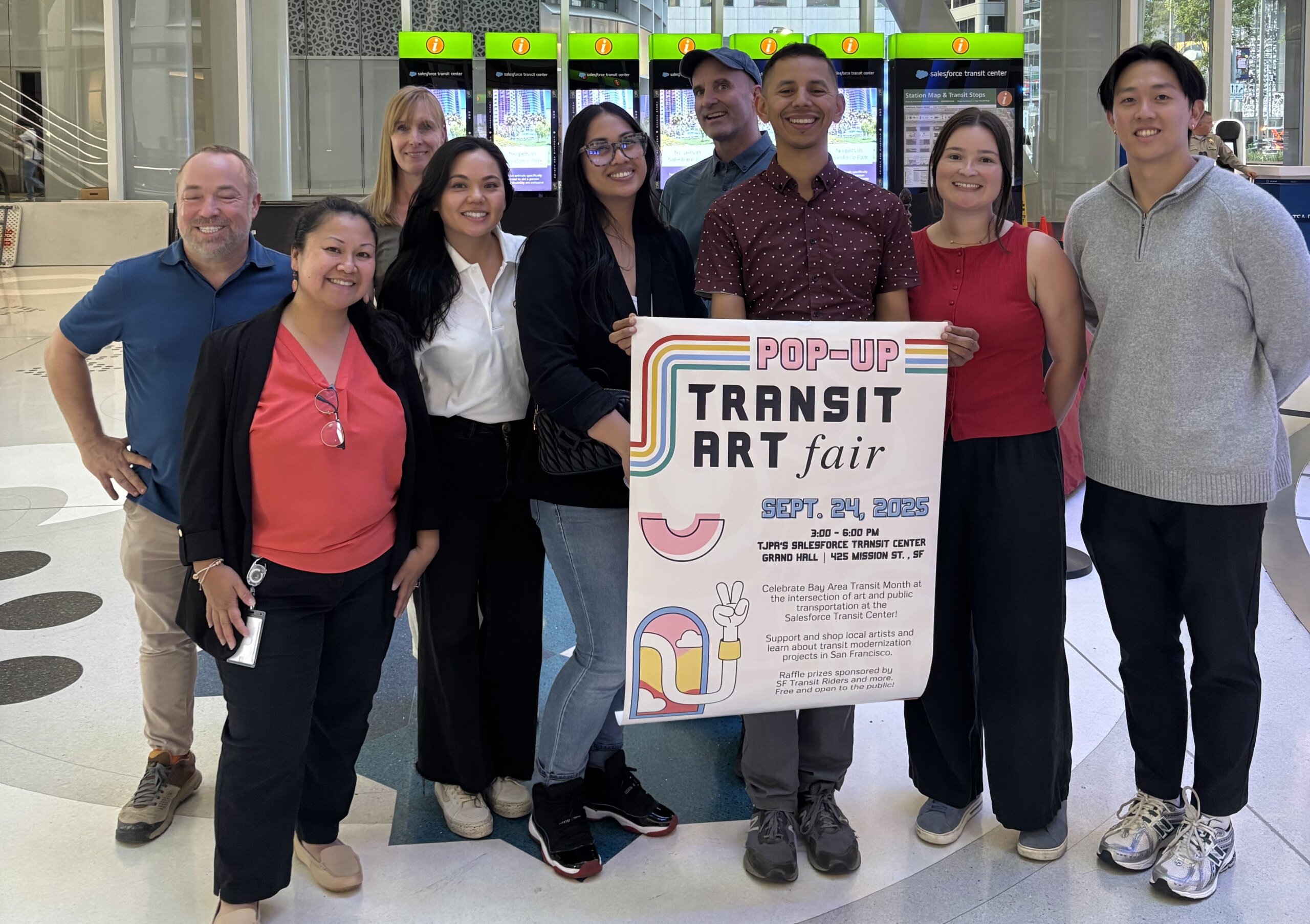
Nagtulungan ang mga kawani ng California High-Speed Rail Authority at Transbay Joint Powers Authority upang magdaos ng isang Pop-Up Transit Art Fair para sa publiko sa Salesforce Transit Center bilang pagdiriwang ng Bay Area Transit Month.
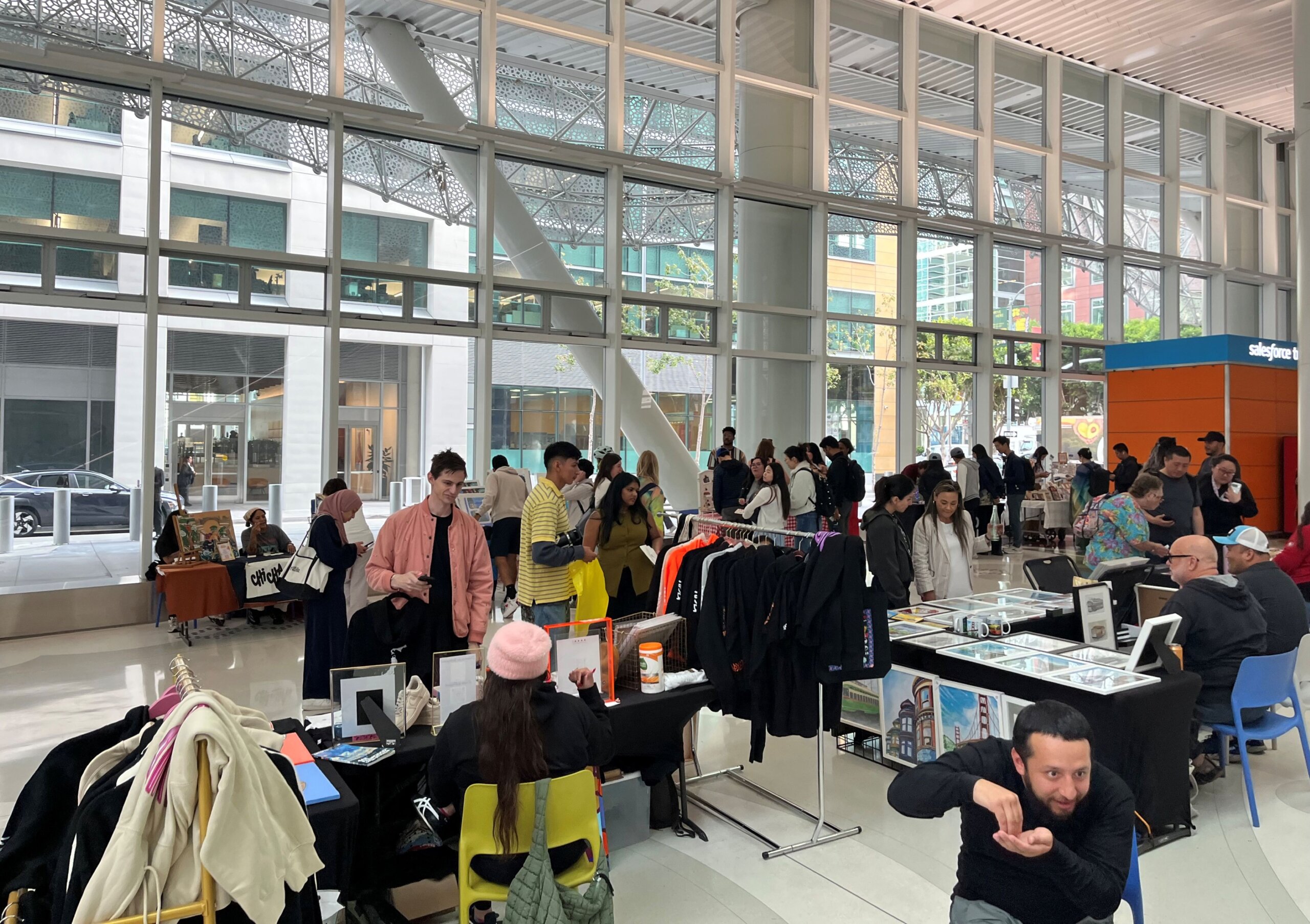
Daan-daang miyembro ng publiko ang dumaan sa art fair, namimili ng mga print, painting, damit, card, at iba pang mga gawang-kamay na bagay habang natututo tungkol sa high-speed rail at sa Portal.
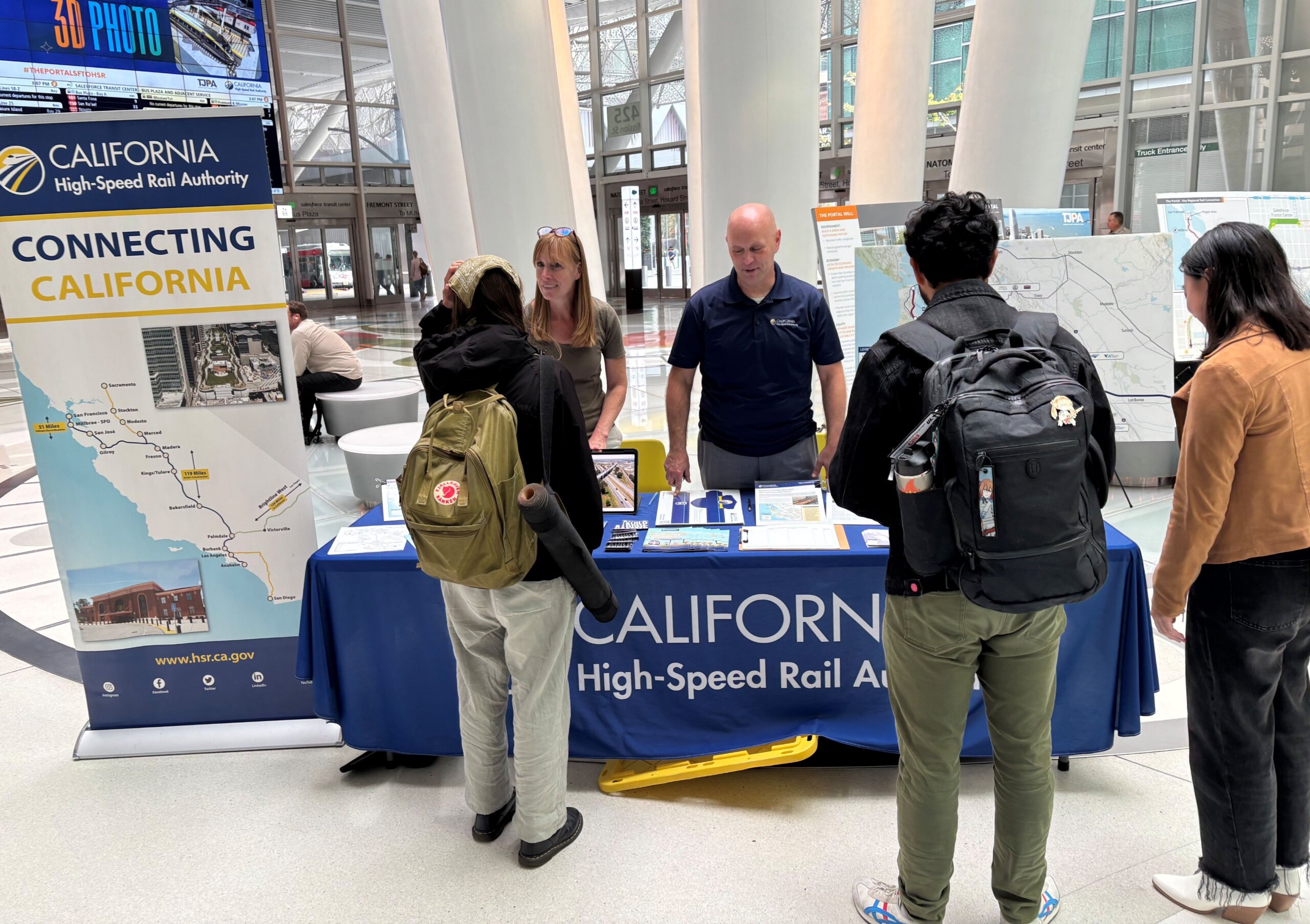
Nakipag-usap ang mga kawani sa publiko tungkol sa progreso sa high-speed rail at tinatakan ang mga 'pasaporte' ng mga dumalo upang matulungan silang sumali sa bunutan para manalo ng mga train box tour, mga paninda sa transit sa Bay Area, at marami pang iba.
| HSR SA BALITA |
Nagiging Palpak ang US sa Laban sa Klima
Sa isang kamakailang panayam kay Alan Ohnsman, ang CEO na si Choudri ay sumisid nang malalim sa magandang kinabukasan ng California High-Speed Rail, habang ang mga pribadong mamumuhunan ay nagsisimulang iangat ang proyekto sa isang bagong antas. "Nandito sila. Kinakausap nila kami. Handa silang mamuhunan," sabi ng CEO na si Choudri habang tinatalakay ang pag-aalinlangan ng iba tungkol sa interes ng pribadong sektor sa proyekto. Taglay ang diin sa pag-unlad at isang kapana-panabik na pananaw para sa kinabukasan ng renewable energy sa California, ang panayam na ito ay isang kawili-wiling pagtingin sa kung ano pa ang darating.
Binuksan ng California High-Speed Rail ang Ruta para sa Pribadong Pamumuhunan
Itinatampok ng artikulong ito ang hakbang ng Awtoridad tungo sa pag-akit ng mga pribadong mamumuhunan at mga developer sa pamamagitan ng isang Kahilingan para sa mga Kwalipikasyon para sa isang Kasunduan sa Pag-unlad (CDA). Ibinahagi sa artikulo ang sipi mula kay CEO Choudri sa pahayagan, "Malakas at patuloy na lumalaki ang interes mula sa pribadong sektor sa pamumuhunan sa proyekto ng high-speed rail ng California". Nagbibigay din ito ng mga detalye ng pagkuha ng kontrata sa konstruksyon ng Track and System, pati na rin ang pag-unlad na nagawa sa ngayon.
Posible ang Misyon, Sabi ng CEO ng California High-Speed
Pandaigdigang Dyornal ng Riles
Nakipagpulong si CEO Choudri kay IRJ Deputy Editor Mark Simmons upang talakayin ang kanyang pananaw para sa high-speed rail sa California. Isinulat ni Simmons, “sa pamumuno ni Choudri, mayroong bagong tuklas na layunin.” Ang artikulo ay nagbibigay ng pangkalahatang-ideya ng paglalakbay ng proyekto patungo sa kinaroroonan natin ngayon at idinetalye ang limang layunin ni CEO Choudri na maghatid ng isang high-speed rail system sa lalong madaling panahon sa 2032.
Inilabas ng California High-Speed Rail ang Pinakabagong Ulat Pangkapaligiran sa Pagitan ng LA at Anaheim
Itinatampok ng artikulong ito ng KTLA ang paglalabas ng Awtoridad ng pinal na ulat pangkalikasan para sa 30-milyang kahabaan na nagdurugtong sa Los Angeles at Anaheim. Gaya ng sinabi ng Regional Director ng Awtoridad sa Southern California na si LaDonna DiCamillo, “Ito ay nagmamarka ng isang makabuluhan at mahalagang milestone sa pagdurugtong mula Southern California hanggang Northern California.” Ibinabahagi ng artikulo ang mga mapagkukunan para sa publiko upang magbigay ng kanilang input sa panahon ng pagbibigay ng komento ng publiko.
Isang Bagong Milestone sa Kontrata na nagkakahalaga ng 3.5 Bilyon ang Naabot ng California High-Speed Rail
Itinampok ng Newsweek at ng halos isang dosenang publikasyon ang isang mahalagang milestone para sa Awtoridad, ang kahilingan para sa mga panukala para sa kontrata ng riles at mga sistema na nagkakahalaga ng $3.5 bilyon, na nagdadala sa atin ng isang hakbang palapit sa paglalatag ng riles simula sa 2026. Ang kontrata ay sumasaklaw sa 119 milyang itinatayo ngayon hanggang sa mga extension ng Merced at Bakersfield. Gaya ng binanggit ng Newsweek, "ang proyekto ang pinakamalaking pagsisikap sa high-speed rail ng Hilagang Amerika at nangangakong magdadala ng mas mabilis at mas malinis na paglalakbay sa buong California."
All Aboard Newsletter Archive
- Newsletter para sa Lahat ng Nakasakay sa Taglagas 2025
- Newsletter ng Lahat ng Nakasakay para sa Tagsibol 2025
- Fall 2024 All Aboard Newsletter
- Summer 2024 All Aboard Newsletter
- Spring 2024 All Aboard Newsletter
- Winter 2024 All Aboard Newsletter
- Fall 2023 All Aboard Newsletter
- Summer 2023 All Aboard Newsletter
- Spring 2023 All Aboard Newsletter
 Tagalog
  English
  Español de México
  العربية
  Հայերեն
  Hmong
Hmong  繁體中文
繁體中文  香港中文
香港中文  简体中文
简体中文  한국어
한국어  日本語
日本語  ਪੰਜਾਬੀ
  Tiếng Việt