

SAFETY
The California High-Speed Rail Authority is building a 21st-century transportation system that will implement the most advanced and innovative safety technology available. Below are examples of how a ride on the California high-speed rail system will be among the safest train rides in the world.
Positive Train Control
Positive Train Control
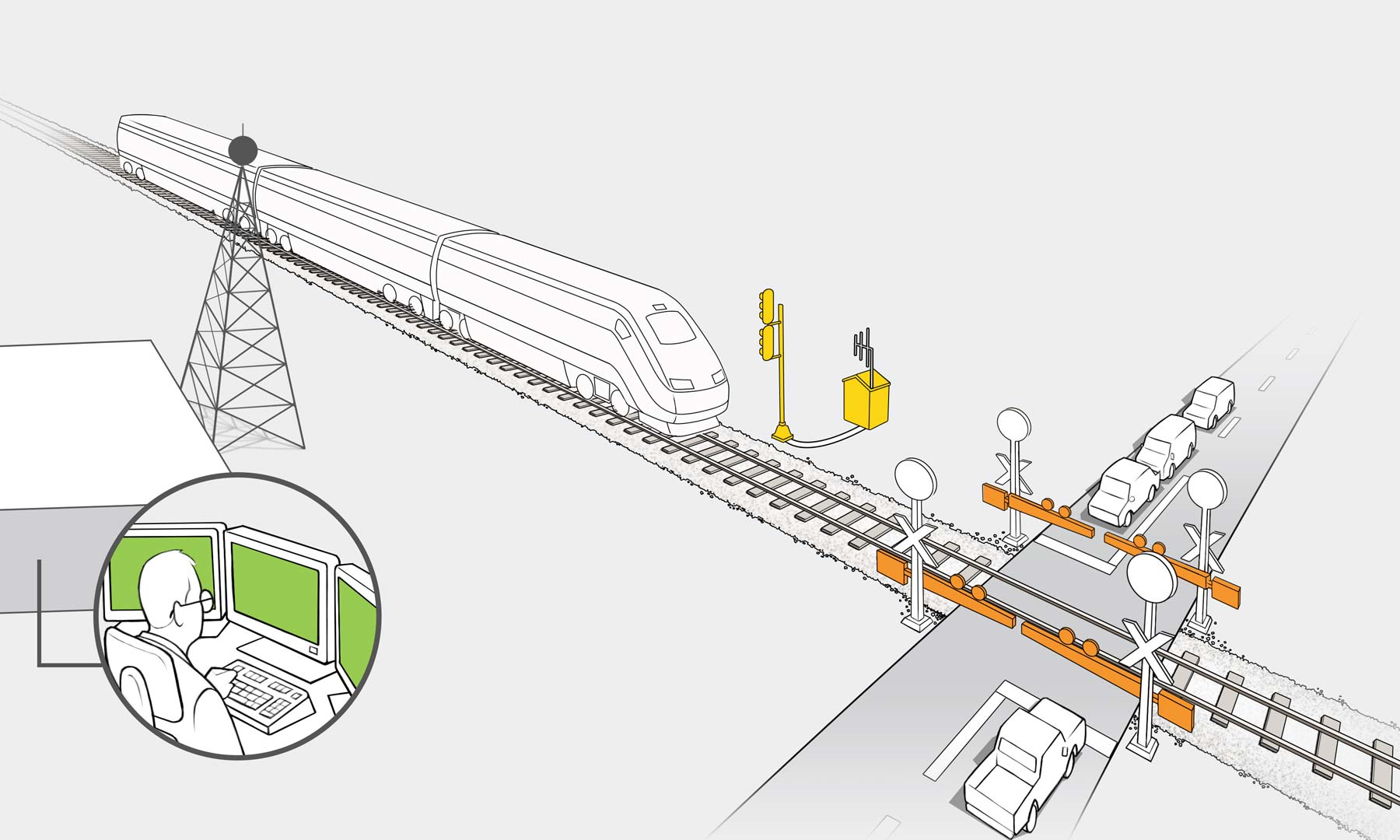
Positive Train Control (PTC) is state-of-the art collision avoidance technology that allows trains, tracks and dispatch centers to actively communicate using a fiber-optic network.
Through PTC, train engineers receive continuous information about speed restrictions, work zones and other safety impacts. For example, the PTC system would alert an engineer approaching a crossing where the crossing arms are malfunctioning. With PTC, a train’s onboard computer displays safe-braking distance based on speed, train length, weight and track curvature. PTC restricts speed limits and serves as a failsafe system. If the engineer doesn’t respond, the PTC system takes over to prevent a train from running a red signal light or entering a stretch of track at an unsafe speed.
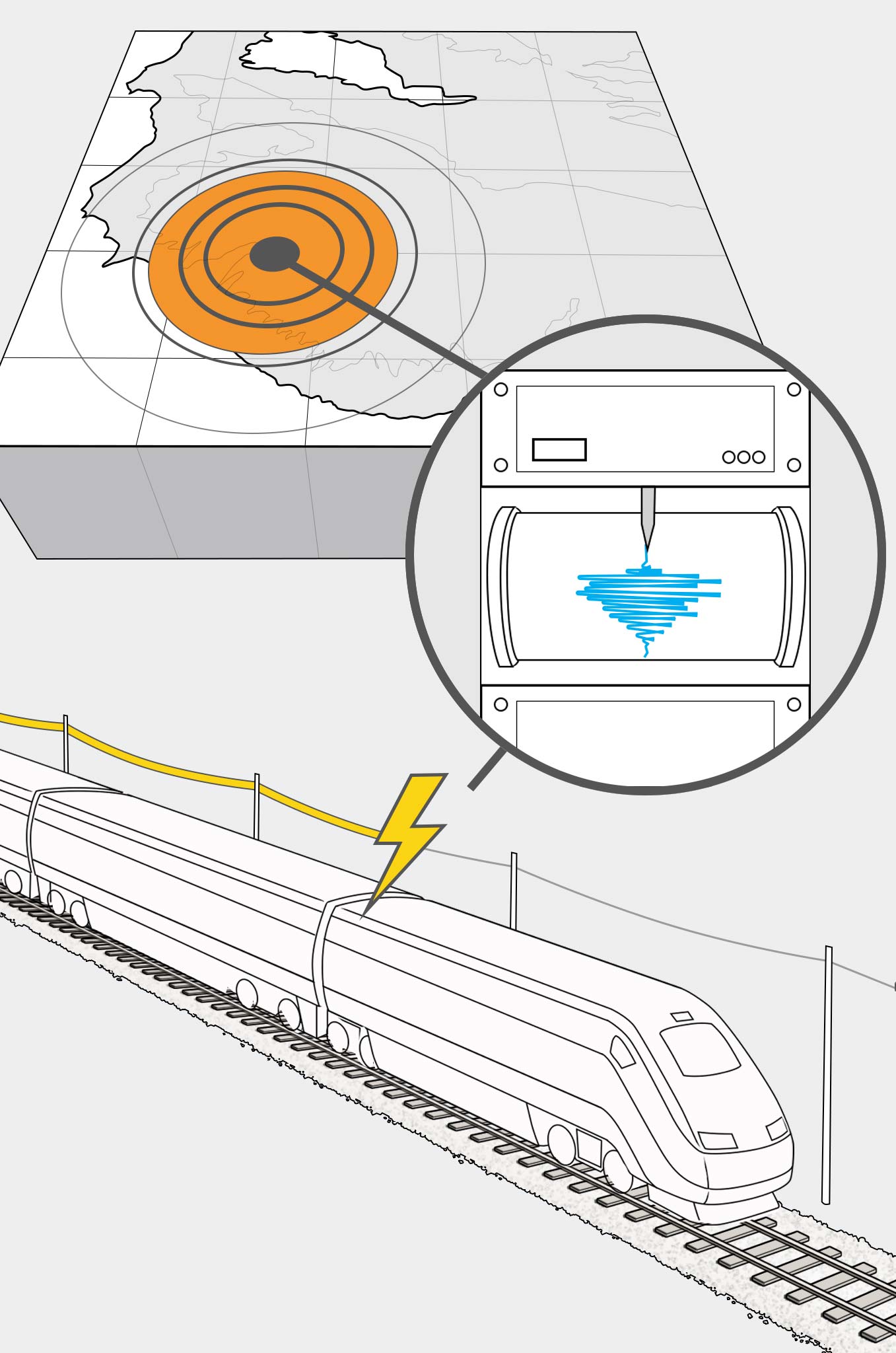
The Authority will implement next-generation technology, Automatic Train Control (ATC), of which PTC is a subset. ATC is service-proven technology used on rail in Europe and Asia that ties in additional safety measures, such as intrusion detection and earthquake detection.
PTC Quick Facts
How California High-Speed Rail is supporting PTC statewide
- Metrolink, Southern California’s 512-mile regional passenger rail network received $81.5 million through the California High-Speed Rail Program, helping it become the first railroad in the nation to have its entire system in service with positive train control technology.
- Caltrain, Northern California’s main passenger rail service along the Bay Area peninsula, received $105.4 million through the California High-Speed Rail Program to install positive train control technology along the operations corridor.
- North County Transit District in San Diego County received $41.8 million through the California High-Speed Rail Program to install positive train control technology along major operational corridors.
- Caltrans received $2.9 million through the California High-Speed Rail Program to install positive train control technology along the BNSF rail corridor between Los Angeles and Fullerton which currently serves Metrolink, Amtrak, and BNSF rail services.
Early Earthquake Warning
Early Earthquake Warning
California has numerous active faults throughout the state that are known to produce large earthquakes. To ensure that the high-speed rail system can operate safely in such a seismically-active area, the Authority will implement a comprehensive seismic safety program, including earthquake early-warning and appropriate operational responses. This is service-proven technology currently being used in Japan and Taiwan.
The infrastructure that will support the high-speed rail program – such as bridges, tunnels, high-speed rail stations, and other facilities – will be built to meet all state standards for earthquake design in California.1
The Authority is also partnering with first responders across the state to create a response plan that will provide appropriate assistance to all passengers and operators on high-speed rail during a seismic event.
Footnotes
1. Caltrans Seismic Design Criteria Version 1.7 (2013); American Railway Engineering and Maintenance-of-Way Association Manual, Ch. 9, seismic design for railway structures (2015)
Grade Separation
Grade Separation
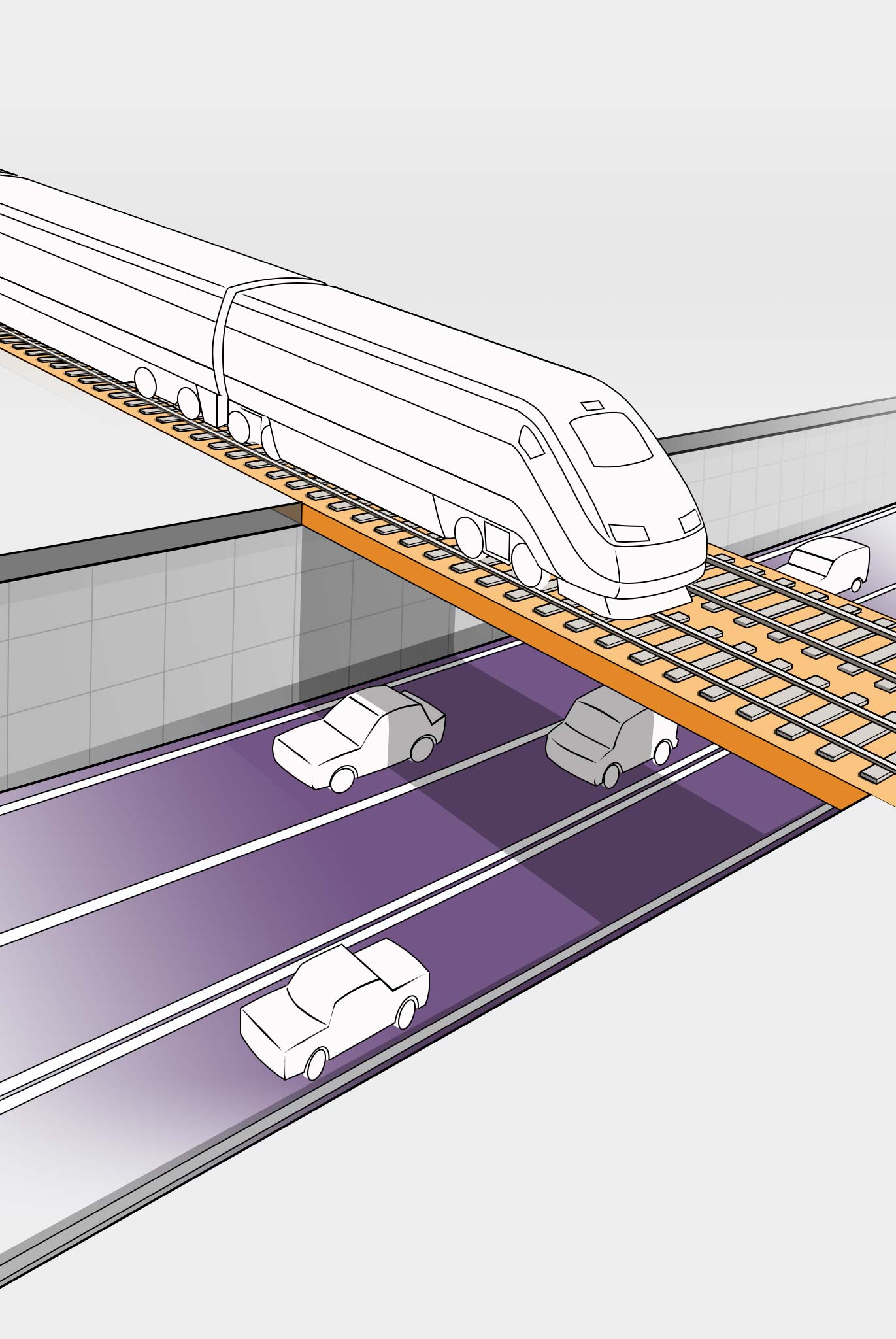
A grade separation is a roadway that is re-aligned over or under a railway to eliminate hazards. Benefits of grade separations include:
- Improved safety
- Reduced noise (no train horns)
- Decrease in traffic congestion
- Reduction in GHG emissions from idling vehicles
- Improved train operations reliability
In the Central Valley, where trains will be capable of running at speeds in excess of 200 miles per hour, the high-speed rail system is being built fully grade separated. As part of this effort, many existing grade crossings with existing freight service will be eliminated. Within the first three construction packages, stretching approximately 119 miles from Madera to north of Bakersfield, there will be a number of existing BNSF Railway and Union Pacific Railroad at-grade crossings eliminated. This will result in major improvements to both urban and rural areas in the Central Valley.
In Northern California, as part of the environmental work being done to identify the final high-speed rail alignment from San Francisco to San José, the Authority is working with communities to accommodate a blended system with Caltrain. This blended system is currently being evaluated for traffic, safety and noise impacts at existing at-grade crossings.
In Southern California, key early grade separation projects include the Doran Street and Rosecrans Avenue/Marquardt Avenue grade crossings. The Rosecrans/Marquardt Avenue Bridge opened in January 2024. In addition to these critical efforts, the Authority is also partnering with various local agencies to evaluate other high-priority at-grade crossing projects to deliver safety and environmental benefits prior to the arrival of high-speed rail.
Quad Gates
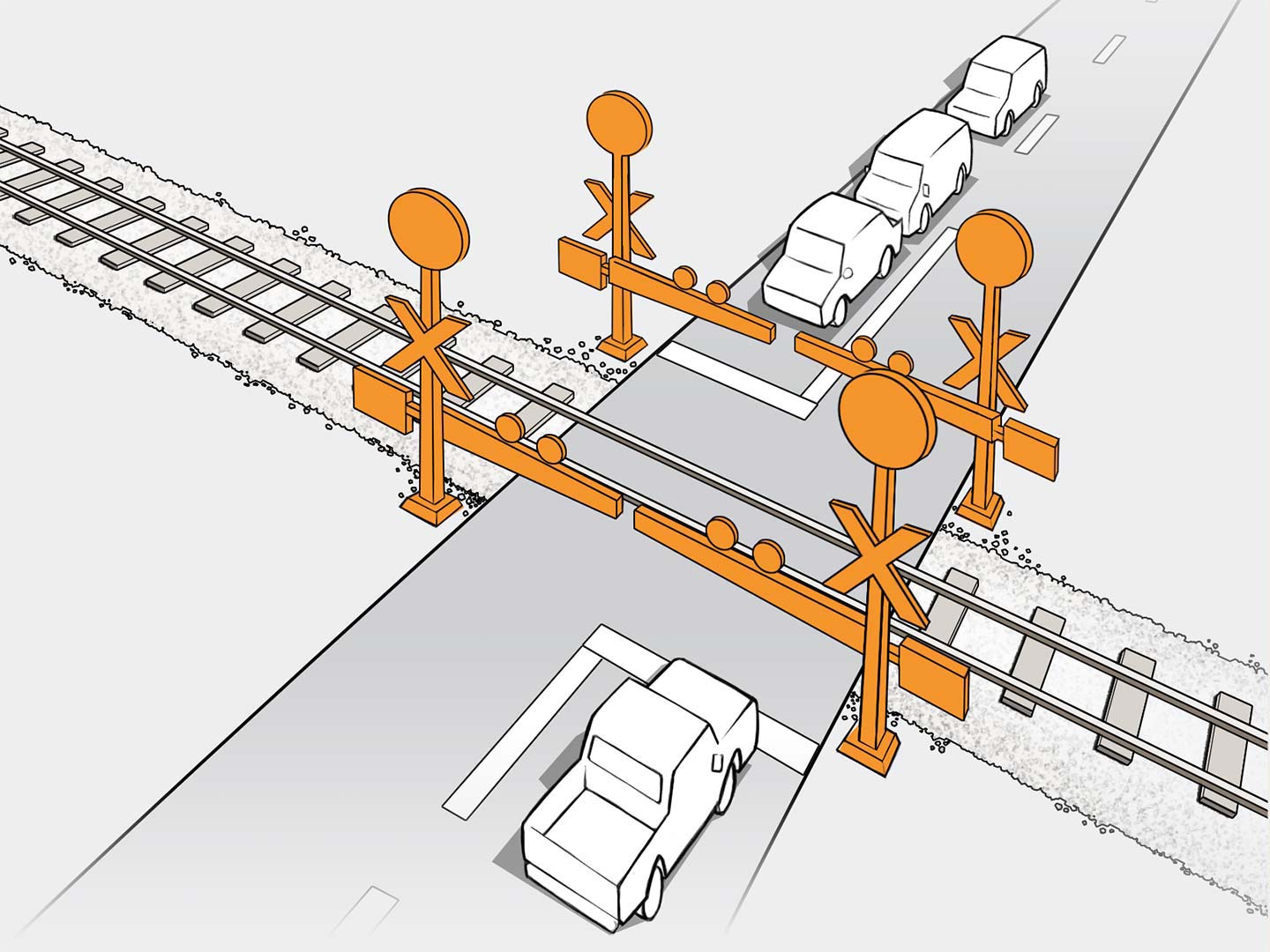
Quad Gates (for track speed of 110mph or less)
Quad gates have been shown to reduce collisions at-grade crossings by 98 percent.1
The Authority will work with communities along the rail corridors to install safer rail crossings, such as 4 Quadrant Gates, or Quad Gates. Quad gates are designed to block all lanes of traffic on both sides of the track, and to provide a closure delay on the exit side to allow vehicles that may get stuck between the gates to get off the tracks.
Footnotes
1. UC Berkeley Safe Transportation Education and Research Center
Intrusion Barriers
Intrusion Barriers
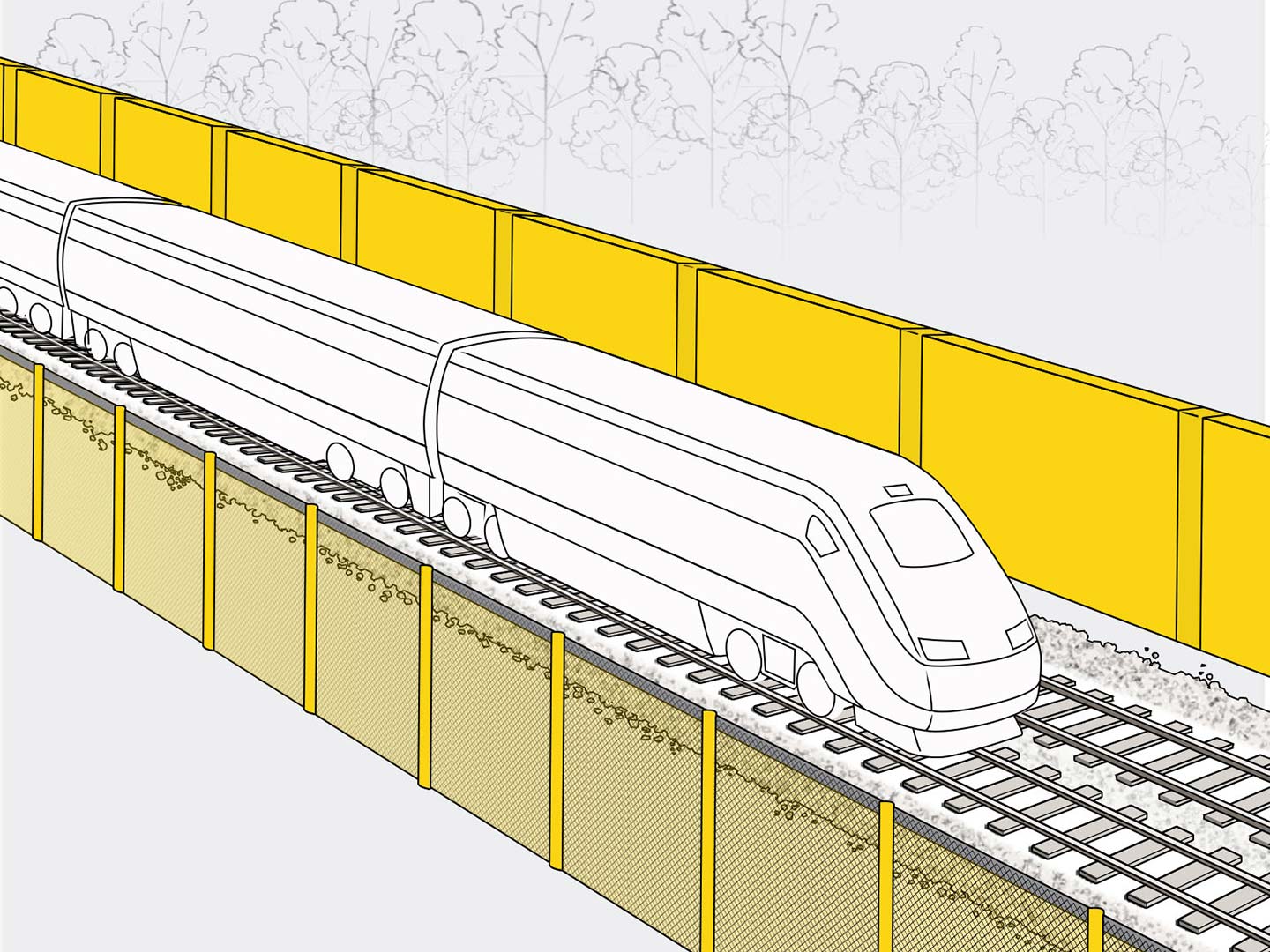
The high-speed rail system will operate adjacent to or within the right-of-way of other transportation systems throughout the state. These transportation systems include passenger railroad lines, freight railroad lines and state or local highways and roadways, and appropriate intrusion barriers would be built accordingly. At these locations, assessments will determine the need for intrusion protection for the respective modes and services. Hazard analyses, risk assessments, and implementation of appropriate mitigations to reduce the potential for intrusion will allow the high-speed rail system to safely operate in proximity to existing transportation systems.
In the rural environment, the Authority will design fencing and other solutions that will minimize potential collisions and accidents. The Authority’s bridges and tunnels will also be dedicated solely to high-speed trains, which will help eliminate potential hazards.
In addition to fencing, walls and other systems can be put into place that would not only help minimize noise and sightlines, but also prevent potential hazards within urban environments. The Authority is committed to working with communities and local jurisdictions to ensure that the barriers blend into the surrounding environments.
Platform Safety & Security
Platform Safety & Security
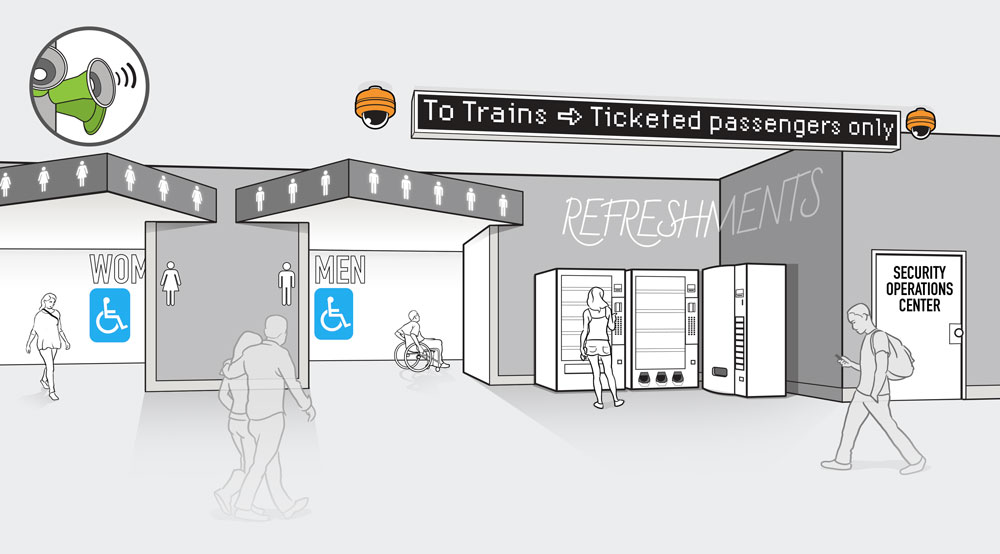
Safety of high-speed rail platforms is being designed to meet and exceed current national standards for train stations. Industry experts work to design platforms that will increase passenger and employee safety.
A train approach warning system, tied to the signaling system, will alert passengers to approaching trains. High-speed rail platforms will be elevated and include solid interlocking barriers to prevent passengers from entering the track area.
Modern train security allows for a less intrusive experience for passengers compared to other forms of transportation, such as air travel.
High-speed rail platforms will focus on passenger loading and unloading for trains. Amenities such as bathrooms and vending machines will be available in the stations outside of the platform area, eliminating hidden locations. Platforms will be for ticketed passengers only, and they will only be allowed access to the platform area shortly in advance of their departure time. This will increase security and ensure a smoother flow of pedestrian traffic.

Platform Accessibility/ADA
Platform Accessibility/ADA
Accessibility of high-speed rail platforms is being designed to meet and exceed current national standards for train stations. High-speed rail station and platform features will be designed to support disabled individuals. Visual and audio warning will give notice to passengers with different abilities. Amenities such as bathrooms and vending machines will be available in the stations away from the platform area.
 English
  Español de México
  العربية
  Հայերեն
  Hmong
Hmong  繁體中文
繁體中文  香港中文
香港中文  简体中文
简体中文  한국어
한국어  日本語
日本語  ਪੰਜਾਬੀ
  Tagalog
  Tiếng Việt